


The Gleaner’s Song by Paula K. Parker
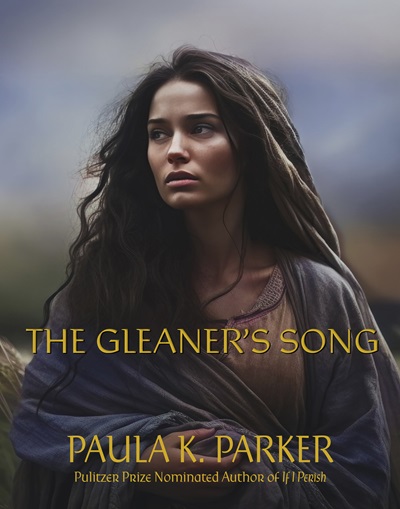
Julie’s Note: The Gleaner’s Song releases in early 2027. Be sure to follow Paula K. Parker’s social media and book links below to stay connected.
Tidbits from my research for THE GLEANER’S SONG: The Story of Ruth
When I began pondering writing a novel about Ruth, Naomi, and Boaz, I read the Book of Ruth multiple times, writing down questions I had about the story. Then I began researching biblical, archaeological, and cultural experts for answers. At this point, besides the manuscript, I have over 22,000kb of research information on my computer as well as a stack of research books and Bibles. I found many interesting tidbits that answered my questions as well inspired other parts of the novel. Below are a few of these tidbits
Naomi’s Family Tree.
The Bible presents Naomi as the wife of Elimelech, who was related to Boaz. Jewish midrashic traditions supply additional genealogical details about Naomi and her family.
According to these traditions, Naomi’s father was a Nasi/Nahsee, or prince, of a clan within the tribe of Judah. Naomi’s father, Elimelech, Salmon (Boaz’s father), and the unnamed kinsman-redeemer mentioned in Ruth 4 were all brothers, sons of Nahshon son of Amminadab. Nahshon is explicitly named in Ruth 4:20 as an ancestor in the family line that would lead to Boaz, David, and ultimately the Messiah.
If this tradition is correct, Elimelech was not only Naomi’s husband but also her uncle and Boaz’s uncle. While such family relationships may seem unusual to modern readers, marriages between relatives were not uncommon in the ancient Near East.
Because the Book of Ruth does not mention Naomi’s father, some Jewish scholars concluded that he had already died. They further suggested that Naomi may have been her parents’ only surviving child. If so, the inheritance law established in Numbers 27 could have applied to her situation.
In Numbers 27:1-11, the daughters of Zelophehad, Mahlah, Noah, Hoglah, Milkah, and Tirzah, approached Moses because their father had died without leaving any sons. In that culture, this placed them in a precarious position. Without a male heir, their family’s inheritance could be lost.
The sisters appealed for the right to inherit their father’s property so that his name would not disappear from among his people. Moses brought their case before God, and God affirmed their request. He instructed Moses that when a man died without sons, his inheritance should pass to his daughters. If he had no daughters, the inheritance would pass to other relatives according to a specified order.
If Naomi was indeed her father’s sole surviving heir, this may help explain why Elimelech’s family possessed substantial land and wealth in Bethlehem and why the question of inheritance became so important in the Book of Ruth.
While I was reading through these scriptures, I noted that Numbers 27:12-13 read:
(NIV) “Then the Lord said to Moses, “Go up this mountain in the Abarim Range and see the land I have given the Israelites.After you have seen it, you too will be gathered to your people,”
(KJV)“And the LORD said unto Moses, Get thee up into this mount Abarim, and see the land which I have given unto the children of Israel. 13And when thou hast seen it, thou also shalt be gathered unto thy people,”
That observation gave me pause. Among the many laws traditionally counted within the 613 commandments of the Mosaic Law, this ruling concerning the inheritance rights of women appears near the close of Moses’ legal ministry.
At the very point where human society might overlook women, widows, and the poor, God’s law steps in to preserve their dignity, inheritance, and future.
This brought new light to Naomi’s story, and later to Ruth’s. God’s concern expressed in the Law was not merely theoretical. It was worked out in the lives of real people through redemption, provision, covenant faithfulness, and the preservation of family inheritance.
The story of Ruth reminds us that God’s laws were never intended simply to regulate society. They were also designed to protect the vulnerable and reveal His character. Through Naomi, Ruth, and Boaz, we see those principles lived out in a deeply personal way.

Paula K. Parker is a Pulitzer Prize nominee, award-winning, best-selling, and internationally acclaimed author, playwright, magazine writer, entertainment writer, devotional writer, curriculum writer, and corporate copywriter. She writes books, articles, plays, reviews, curriculum, and inspirational devotions. Paula lives near Nashville, Tennessee, with her husband Mike, who is also a writer and a professional actor.
Her biblical novel, IF I PERISH; A Queen’s Sacrifice, reached multiple best-selling charts and was nominated for the prestigious Pulitzer Prize and was a Finalist in the 2025 Storytrade Book Awards. Her biblical novel, THE CARPENTER AND HIS BRIDE; The Birth of Hope, also reached multiple best-selling charts and won the Bronze Level in the Inspirations Christian Book Awards. Her biblical Sisters of Lazarus trilogy—BEAUTY UNVEILED, GLORY REVEALED, and GRACE EXTENDED—reached multiple best-selling charts.
Paula K Parker’s Website and Social Media Links
Website: https://paulakparker.com/
Facebook Author: https://www.facebook.com/PaulaKParkerAuthor
Facebook Personal: https://www.facebook.com/paula.k.parker
Instagram: https://www.instagram.com/paula.k.parker.author/
Threads: https://www.threads.com/@paula.k.parker.author
GoodReads: https://www.goodreads.com/author/show/4641688.Paula_K_Parker